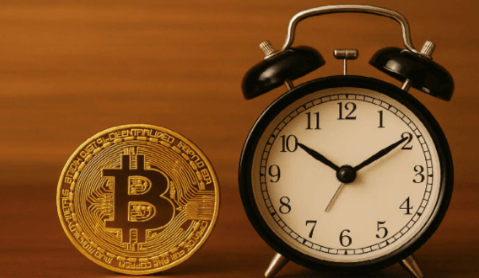
Layer 2 solutions offload transaction load from base chains, enabling faster, cheaper operations while preserving on-chain finality. They anchor settlements securely and batch results to reduce on-chain pressure. Different L2 designs trade data availability, security guarantees, and settlement speed, shaping dapp architecture. This balance influences user experience and developer choices, yet practical adoption hinges on onboarding, tooling, and interoperability. The implications for scalability and sustainability warrant careful assessment as the ecosystem evolves.
Explaining Layer 2: The Basics and Why It Matters
Layer 2 refers to secondary networks built atop a base blockchain to improve scalability and efficiency. Layer 2 solutions abstract transaction load from the main chain, enabling faster processing and lower fees without sacrificing security. This design challenges scaling myths by showing practical throughput gains. Clear user onboarding remains essential to unlock widespread adoption and sustained freedom through accessible, trusted experiences.
How Layer 2 Unlocks Faster, Cheaper Transactions
To achieve higher throughput and lower costs, Layer 2 solutions move most transactions off the main chain while preserving finality through secure anchoring or periodic settlement.
They enable fast settlement by processing in secondary networks and batching results for on-chain finality, reducing load.
This design supports cheap microtransactions and scalable usage without compromising security or decentralization.
Freedom-friendly efficiency endures.
Common L2 Types and What They Do for Dapps
Common Layer 2 types are defined by how they handle data availability, security guarantees, and transaction Model, and each category offers distinct implications for Dapps. They differ in settlement speed, scalability, and trust assumptions, shaping developer tradeoffs. Fast settlement emerges in optimistic and ZK-based systems, while scalable privacy is pursued through data-minimized proofs and encrypted channels, aligning with freedom-oriented architectures.
Evaluating L2 Solutions: Security, UX, and Ecosystem Impact
Evaluating L2 solutions requires weighing security guarantees, user experience (UX), and broader ecosystem impact against the tradeoffs outlined in prior discussions of data availability, security models, and transaction paradigms.
The analysis highlights security tradeoffs, quantified risk, and throughput versus finality.
UX implications include onboarding challenges, wallet flows, and recoverability, while ecosystem effects reflect interoperability, developer tooling, and network incentive alignment.
Frequently Asked Questions
How Do L2S Affect On-Chain Governance and Voting Rights?
L2 solutions minimally alter on-chain governance; governance incentives and voting mechanics shift toward layer-2 governance tokens and optimistic timelines. They may centralize certain decisions, yet preserve proportional voting rights for users with stake, enhancing scalability and participation.
Can L2S Eventually Become Fully Decentralized Protocols?
Exaggeratedly, yes, L2s can become fully decentralized protocols, though gradual. They rely on robust governance incentives, transparent upgrade paths, and resilient security models. The outcome depends on incentive alignment, community stewardship, and interoperable, permissionless decision processes.
What Are the Long-Term Security Trade-Offs of Rolling Back to L1?
Rollbacks to L1 trade short term liquidity for broader security guarantees, but introduce regulatory uncertainty and potential centralization risks; in the long term, trade-offs hinge on trusted validators, cross-chain consensus, and the balance between flexibility and audited resilience.
Do L2S Support Non-Fungible Tokens Beyond Eth-Based Assets?
L2 solutions generally support non-Ethereum NFTs via bridges and standards, enabling NFT marketplaces, gaming assets, and cross-chain compatibility; liquidity mining can extend to these assets, though throughput, latency, and security trade-offs vary across ecosystems and networks.
See also: The Future of Smart Roads
How Do L2S Impact Cross-Chain Interoperability and Bridges Risk?
Layer 2s impact cross-chain interoperability by enabling faster settlement and standardized proofs, yet introduce bridges risk and complex security assumptions; scaling tradeoffs occur between decentralization, finality, and liquidity, demanding rigorous audits and cautious asset bridging strategies.
Conclusion
Layer 2 solutions meaningfully expand crypto scalability by moving transaction load off-chain while anchoring results on the base chain. They deliver faster, cheaper interactions without sacrificing finality or security. With diverse models—Optimistic, ZK-rollups, and others—developers can tailor tradeoffs between data availability, latency, and UX. As ecosystems mature, interoperability and tooling will be pivotal for broad adoption. Like bridges built with precision, Layer 2s connect fragmented networks into a cohesive, efficient, and sustainable crypto frontier.